
You have a solid business idea. You know it could work. But without money, it stays stuck on paper. That is the reality for too many young entrepreneurs across Africa.
Access to funding is a major hurdle. Banks ask for collateral you do not have. Loans come with interest you cannot afford. Grants offer a different path. They provide capital that you do not pay back. This allows you to focus on building your business, not worrying about monthly repayments.
Governments, development agencies, and foundations across Africa are investing in youth-led businesses. They fund ideas in agriculture, technology, clean energy, healthcare, and education. If you know where to look and how to apply, the money is there.
What Are Entrepreneurial Grants?
A grant is a financial award given to a business or individual to support a specific project or activity. Unlike a loan, you do not have to repay it. However, grant providers usually expect updates on how the money is used and what results you achieve.
Grants are competitive. Funders look for businesses with clear potential for growth and impact. They want to see that their money will create jobs, solve problems, or drive innovation. A strong idea is not enough. You need a solid plan for execution.
Types of Funding Available
Not all grants are the same. Understanding what is out there helps you target the right opportunities.
-
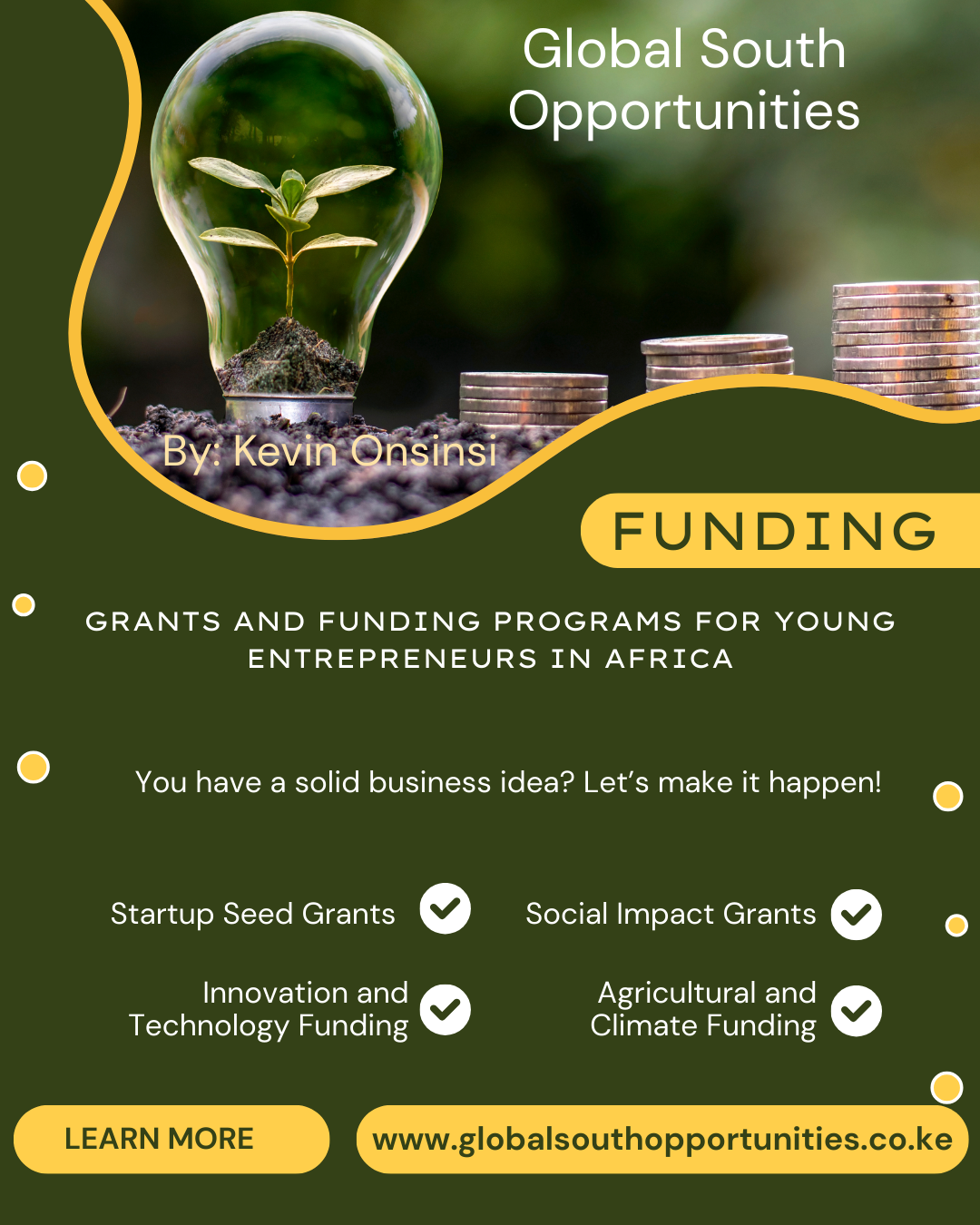
Startup Seed Grants: These support early-stage businesses. If you are still developing your product or testing your market, seed grants help you take the first steps.
-
Innovation and Technology Funding: Tech startups working in fintech, health tech, AI, or clean energy often qualify for grants specifically aimed at driving digital innovation in Africa.
-
Social Impact Grants: If your business addresses issues like unemployment, food security, or access to education, you are a strong candidate for impact funding. These grants prioritize community benefit alongside profit.
-
Women and Youth Entrepreneurship Funds: Many organizations run programs specifically for women founders and young entrepreneurs. These funds recognize that certain groups face extra barriers to capital.
-
Agricultural and Climate Funding: Agribusinesses and green startups are attracting serious funding. Donors want to support solutions that strengthen food systems and address climate change.
Where to Find Legitimate Funding Opportunities
You cannot rely on luck or social media posts. You need a consistent strategy for finding opportunities.
-
International Organizations: Groups like the UNDP, UNIDO, and various UN agencies run funding programs for African entrepreneurs.
-
Development Agencies: Bodies such as GIZ, USAID, and DFID often fund youth enterprise programs.
-
Innovation Hubs: Local tech and entrepreneurship hubs regularly share grant opportunities with their communities. Join them.
-
Accelerators: Startup accelerators sometimes include grant funding as part of their programs. They also offer mentorship and investor access.
-
Verified Platforms: Use trusted sites like Global South Opportunities. They filter out scams and outdated listings so you see only verified, current calls for applications.
Common Eligibility Requirements
Before you apply, check if you actually qualify. Most programs look for the following:
-
You must own or lead the business.
-
The business should be legally registered or in the process of registration.
-
You operate in an eligible country (usually listed in the guidelines).
-
Your business has a clear model or implementation plan.
-
You can demonstrate potential for economic or social impact.
-
You provide realistic financial projections.
Some programs accept ideas at the concept stage. Others require proof that your business is already running and generating revenue. Read the requirements carefully.
How to Prepare a Competitive Application
A strong application takes time. Rushing reduces your chances.
-
Define the Problem Clearly: Explain the specific issue your business solves. Show that you understand your customers and the local context.
-
Present a Realistic Business Model: Show how you will make money and sustain operations. Funders want to support businesses that can survive after the grant money is spent.
-
Demonstrate Impact: Be specific about outcomes. How many jobs will you create? How many people will benefit? What problem will you reduce or solve?
-
Provide a Clear Budget: List how you will use the funds. Be realistic. Inflated numbers or vague categories hurt your credibility.
-
Follow Instructions: This sounds basic, but many applicants fail here. Submit the correct documents. Meet the deadline. Stick to the word count.
Mistakes That Get Applications Rejected
Knowing what not to do is just as important as knowing what to do.
-
Focusing only on the idea and ignoring execution. Funders care about how you will actually deliver.
-
Sending the same generic application to multiple programs. Tailor each one.
-
Applying to programs that do not match your sector or business stage. You waste your time and theirs.
-
Ignoring impact. If you cannot explain how your business benefits others, you look like a weak candidate.
-
Submitting incomplete applications. Missing documents signal disorganization.
Why Grants Matter for Young Entrepreneurs
Grants do more than provide money. They validate your business. They give you credibility with other investors. Many programs also offer training, mentorship, and networking opportunities that help you grow.
For young entrepreneurs in Africa, grants can be the bridge between a great idea and a real, operating business. They allow you to test, build, and scale without the pressure of debt.
Final Thoughts
Funding is available. Institutions across Africa and around the world want to support young entrepreneurs like you. But you have to put in the work. Search consistently. Prepare thoroughly. Apply strategically.
Every successful founder started somewhere. For many, that starting point was a grant they found and an application they submitted. Yours could be next.
Stay informed. Use trusted platforms. And keep building.